Thursday, June 14, 2018

Review: Trail of Lightning


Title: Trail of Lightning
Author: Rebecca Roanhorse
Series: The Sixth World
Volume: 1
Genre: Post-apocalyptic, fantasy
Release Date: June 26, 2018
Genre: Speculative Fiction, Fantasy
Goodreads
eGalley received through NetGalley

Dinétah (formerly the Navajo reservation) has experienced a rebirth since rapidly rising seas drowned much of the continent. Beings of legend now walk in this new world, and not all of them are content to leave the humans be. Maggie Hoskie is a supernaturally gifted monster hunter, starkly aware that, talented as she is, she has less at her disposal than her mentor, a legendary hero who abandoned her without offering a reason. When Maggie is enlisted to try to save a young girl from a monster, what she uncovers threatens more than just a few lives, and- accompanied by her jury-rigged old truck and an unconventional Medicine Man (in training)- Maggie sets out to stop it. 

Out of Ten: 8/10

Review at a Glance: A dominantly character-driven (and action-filled) journey through a post-climate-apocalypse world haunted by supernatural monsters and immortals.

Review: I do love a good climate apocalypse. This is a bit more of a supernatural climate apocalypse (or at least: this climate apocalypse blurs the lines between "humans messed with the natural world and feedback loops led to the climate apocalypse" and "humans messed with the natural world and the natural world messed back"). My mental map of the United States, especially the Southern states, is a little bit disgraceful (and even more disgraceful when it comes to my awareness of the extent of traditional Indigenous territories... most of the territory maps I've studied are more Northern). (Which is my long winded way of saying that I am familiar with neither the traditions and beliefs of the Diné, nor where in America Albuquerque is located. I had to do a bit of Googling.)

Maggie joins the ranks of so many main characters before her in that her life is just constantly being interrupted by supernatural beings who want something from her and like to meddle. Seriously the immortals in this book are... hmm... entitled and creepily involved in Maggie's personal life, like, back off. It's bad enough that you keep sending her off on random quests and things, please let her have her own personal life, maintain professional boundaries, or whatever. MYOB, Ancient Immortal Powers, M.Y.O.B

Maggie is kind of the withdrawn, jaded, hit-first-ask-questions-later hero type. Honestly she's one of the best examples of the trope I've seen in YA/NA- partly, I think, because so often in the fantasy literature I'm familiar with, this role is almost exclusively both a) given to male characters and b) played off as something totally appealing and cool and a good thing to be. Trail of Lighting gives us Maggie, a character fits this trope, but lets us see that she's a person who is struggling, she's scared a lot of the time, she's still trying to come to terms with her power, and that she's had her faith (in people, in her abilities, in the world) badly shaken (if not totally shattered) on multiple occasions. She's faced a lot of trauma that she's still struggling to process, and she's got her walls up. Basically I really appreciate how this particular trope is fleshed out and given new dimension in Maggie as a character. It isn't necessarily that the trope is deconstructed on Maggie, although I'd love to see it continue to work it's way there, but it's certainly more believable on her. I hope you realise that I'm restraining myself from writing an essay about her character. You came here for a review, not an essay. (Or possibly you came here for pizza and are confused and disappointed to find just words. I don't pretend to know your business). 

Kai was a more difficult character for me to fully wrap my head around, possibly because, unlike Maggie, I didn't spend the entire book seeing from his point of view. By the time I was about halfway though I did kind of feel like yelling "Maggie he's hiding something I don't know what it's something and I know you've got more than enough of your own crap going on but please ask him about it because I just know it's going to come back and bite us later" and I was. Not wrong. So that did add a bit of frustration to the reading experience. That aside his dynamic with Maggie was otherwise interesting because- with her taking the stoic warrior role who has Seen Some Things- he winds up in a role that makes him seem more open by comparison. He also provides knowledge and insight that we wouldn't otherwise have had (sometimes literally: he's better with seeing into the supernatural world that Maggie is during at least one confrontation), and his abilities remain a bit mysterious... His relationship with Maggie proceeded kind of in fits and starts just because of who they both were as people and also because of the situation they were in, and it didn't really feel unrealistic, which I appreciated.

With these two as the lead characters, it did kind of stand out when many of the supporting characters didn't feel nearly as developed or authentic. There were some that felt real despite having spent little time with, and others that just... somehow didn't. Some felt mostly just like... concepts of a character (the one character we know is on-page stated LGBT+ felt a bit trope-y, for example... not so much that there aren't people in the community with the traits he has but more that he hadn't been... fleshed out enough around them?) This might be because they're slated for further fleshing out in successive books, given that we're certainly not done with all of them. Neizghání was a strange case in that I struggled to find... justification for any of his actions beyond ~vague supernatural reasons~ and "being a genuinely terrible person who DOES NOT know our heroine as well as he thinks he does" felt kind of mystifying, partly because... there just isn't that much else to him? Like I get that people think of him as a hero because he's fought monsters but he's awful to Maggie. Like. Abusive awful? Never meet your heroes, I guess. The contrast between her memories of him and him when we meet him is staggering.

I feel like I'm beginning to ramble so I've just got to say: when Maggie stood on top of the truck in the book I was super excited because. COVER IMAGE! IN THE BOOK! (I get excited about weird things, possibly.)

The plot itself does kind of feel like a standard quest in a lot of ways: supernatural being shows up, assigns the hero a task, hero tries to accomplish said task while getting sidetracked. Combined with another sort of quest: hero discovers horrible thing, hero must investigate. The plot in a lot of ways felt like it took a back seat to the characters. It wasn't that I was uninterested in the plot, I was just more interested in Maggie's journey. The plot itself acted as a vessel for that, as well as to draw attention to the history of the Diné and the effects of colonialism- there was a line that I swear I highlighted but that isn't showing up in my eARC that essentially just says that, for the Diné the rising water wasn't the apocalypse-that had happened a long time before, which was an impactful and meaningful line- and. Okay. Also the plot was a vessel for some pretty cool monster-fighting scenes. The only thing about the plot that did bother me a little was it kind of felt like there was a cliffhanger at the end just for the sake of there being a cliffhanger? 

Overall this novel was an intriguing peak into Diné lore, a quest rich in action and meddling supernatural beings, and, above all, a character driven journey. I really enjoyed reading it and I'm looking forward to seeing where the story goes next. 

Friday, June 8, 2018

May 2018 Mini-Reviews (a.k.a.The Space Opera Edition)

Okay so (during Bout of Books) I read entirely space operas. Sometimes you've got to have a theme, I guess. Sometimes your TBR is just really betraying of your preferences. These are things that just happen occasionally. 


The Long Way to a Small Angry Planet by Becky Chambers
8/10

This is such a quiet story. It's the story of a series of stories, more or less, all of which concern the crew of the wormhole-creating ship Wayfarer. The main character is ostensibly Rosemary, but the story focuses on all members of the crew and their day-to-day trials. The reader, along with the characters, explores a galaxy full of alien species with vastly different biological and social arrangements.

In a lot of ways, this is exactly up my alley for a sci-fi or space opera. I like my sci-fis on the optimistic side, and this book features people traversing differences, sharing experiences, and doing their best to solve problems- even problems like being boarded by gun-toting hostiles- through diplomacy and negotiation. And I liked that component a lot, because I'm predictable all-get-out. This is a book that uses speculative fiction the way I like it used- to hold a mirror up to humanity and attempt to see it in different lights; as well as to poke some more complex topics with a stick and explore them. I'm also a big fan of found family as a trope and the crew of the Wayfarer definitely qualifies as that.

I have mixed feelings about the overreaching plot of this one. I remain uncertain as to whether or not a novel about distances being bridged ending with the acknowledgement that, sometimes, a distance can't be bridged is antithetical or not. In the end, I don't think it is- some distances can't be bridged- especially not if all parties aren't willing to try.

Anyway clearly I really liked this book and it made me be very philosophical which, again, is how I like my speculative fiction. (I like being a bit philosophical about things because I'm a dork. That's pretty much the entire reason.) I feel like this is less a book I want to review and more one I want to talk about at length on very specific, sometimes spoiler-y, points. So that might be a thing I do.


A Closed and Common Orbit by Becky Chambers
7/10

The indirect sequel to The Long Way to a Small Angry Planet, this novel maintains the quiet, contemplative theme, this time with more AIs! I like a good AI story. This one felt a little slower for me, although I actually tore through it a lot faster (due in part to it being the book was reading on the last day of the Bout of Books read-a-thon). I still quite enjoyed it though.

Both of these books were good and contained so many elements that I like, and I did like really like the reading experience. They just somehow didn't work the mysterious alchemy that transforms a book that I like and recognise that I like into a book that's is UTTERLY MY FAVOURITE. I think that's more me than the book, though, and it was overall quite good.


Arabella of Mars by David D. Levine
7/10

This was an interesting one because it's such an exercise in suspension of disbelief. It imagines outer space as something truly different from what we now know space to be. This is one girl's journey through space-as-would-be-imagined-by-a-contemporary-of-Jules-Verne, with heavy shades of Jane Austen. The space between planets is traversed by flying ships. This first book in a planned trilogy introduces the reader to Arabella Ashby, regency lady raised on a Martian homestead and removed to Earth in the face of her mother's fears that Arabella is growing up far too wild and unladylike for polite society. After her father's unexpected death, a homesick Arabella finds herself marooned on Earth, betrayed by a cousin who is after the family fortune- with Arabella's brother (still on Mars) the only barrier. So naturally Arabella dresses up as a boy, signs up as cabin boy on the quickest Mars-bound ship she can, and sets of to beat the treacherous cousin there.

I had a fun reading this one, it was a pretty novel concept for me. So I really enjoyed the visuals of the story (flying ships! That moved between planets! Regency aesthetics!), and I quite liked the character of Arabella. There were bits that felt really period-accurate (despite the space-travel). The gender politics, weird thing where any person from India an English person met outside India was secretly royalty (seriously this just seems to be a thing with a certain sort of novel written in the 19th-20th century), and the blithe approach the English took to colonising another planet that already HAD inhabitants- which we know they took to just showing up in other countries and acting like they owned the place in our less inter-planetary world (although they seem to have treated the martians slightly better on the whole than the English treated people Indigenous to the countries they colonized here on Earth... which is a sad statement given how the English treat the Martians in this book... I'm digressing. Colonial politics is not for a mini-review, Kelly). Anyway. It felt like it was something that could have been written at the time, albeit with some decidedly more modern quirks in writing style and characterisation. I'm hoping to get my hands on the sequel soon (the library where I work has it so... soon... hopefully). 

Thursday, May 24, 2018

Review: Heart of Iron


Title: Heart of Iron
Author: Ashley Poston
Genre: Space Opera
Release Date: February 27, 2018
Goodreads

Ana was raised by outlaws, who found her as a child, adrift in space with a sentient android (or Metal), D09. D09 is an illegal android, still in possession of freewill, and, when he begins to malfunction, Ana will stop at nothing to help him. When the coordinates to the lost ship that is her last hope are snatched from under her nosed by Rob, a privileged Ironblood boy, she chases after him. After infiltrating an Ironblood party, everything goes wrong and they wind up fugitives on the run, both desperate to reach the coordinates for their own reasons. As they uncover secrets about the Metals, Ana's heritage, and a threat to the Empire itself; Ana finds herself torn between saving D09 and protecting a kingdom whose rulers want her dead. 

Out of Ten: 6/10

Review at a Glance: An entertaining if not entirely engaging space opera retelling of Anastasia.

Review: I never watched Anastasia as a child. I didn't watch really many children's movies as a child as a result of a long story involving Frosty the Snowman. I learned the history of the Romanovs and the Russian revolution well before seeing Anastasia, the widely acclaimed animated feature film. (I was a somewhat unusual child.) I only got around to seeing it a few years ago so I don't have the same sort of nostalgia attached to it that a lot of people probably went into this Space Opera Anastasia retelling with. So it is possible that I just wasn't the target audience.

This was my kick-off read for the Bout of Books read-a-thon and I... didn't hate it? The thing was that I wasn't really that impressed by it either. I realise that this is a space opera so there's a certain amount of leeway. It's more fantasy than science fiction. But the fact remains that it didn't really set up the parameters of the world. I guess it's just a magical thing that only royalty can hold the crown without it rusting? (With the exception of androids who, as one of the main characters points out, literally within the first 100 pages, which is one heck a legal loophole, and also seemed one heck of a Chekov's gun set-up, so I just kept expecting the android gambit throughout the book. Just. Kept waiting for it). The biggest difficulty for me was that the world wasn't really built up, on either a level of history or scale.

It was alright once I got used to it and let go of any expectations I'd gone in with. I didn't love the characters but they were at least consistent within their motivations. They overall just felt very simple? I think things that were supposed to come off as tragic didn't really because I just wasn't that engaged, and I felt like their relationships formed... strangely and for some of them quite fast as well. Rob just... wasn't a very interesting character and also for some reason his name bothered me (I think it was just the spelling), and Ana wasn't much better. It just didn't feel like there was much to them. I didn't dislike them but I didn't get... super attached either. I liked Ana's pirate moms though, they were cool and I hope we get to learn more about them.

 The story itself was pretty simple, the classic "girl is secretly PRINCESS," story, and, while there were other plot twists I didn't find them all that... surprising. I just kind of kept on going through the story going "ah yes that makes sense" I just didn't find myself having any really strong emotional response to the story.

All that said, I did still find the story interesting enough to finish and I'll probably pick up the second book when it comes out, I'm curious about what the author plans to do with some components of the story. Despite my not being super-invested in the characters, I still found following their story entertaining enough, for all it's cliches.


Monday, May 21, 2018

Bout of Books Read-a-thon 22 Wrap-Up

Okay so in a lot of ways I spectacularly failed! Things got busy I missed doing all of the challenges because I forgot they existed for the first half of the week and then business happened during the second. It did give me a push to read a little more than I was planning to do this week. Now to review this week's reads. Onward and upward! (Was that a joke based on the fact that I have only read space operas for the past week? You decide.)

Total Page Count: 1585

Books Read


Page Read: 467/467 (COMPLETE)
This one was... fine. It wasn't terrible, and I'll probably carry on with the series.


Page Read: 350/350 (COMPLETE)
Okay so I finished this two days ago and then things in life got busy and then posts didn't happen. But I finished it! There are components of this story that still confused me... Once I got my head wrapped around the concept of space as something much closer to the sea than, well, space, I was able to follow the plot and the world,but sometimes the character relationships and whatnot didn't entirely follow for me.


Page Read: 404/404 (COMPLETE)
This has been on my TBR for quite a while, and I finally got my hands on a copy and read it! I wasn't as TOTALLY PSYCHED about as I was hoping I would be, but I still really enjoyed it. It's think it's the first time I've read a book that uses xe/xyr pronouns implied as being the default for someone whose gender is unknown, so that was pretty awesome.


Page Read: 364/364 (COMPLETE)
Okay so I think reading this one I really got into the read-a-thon mood, like I just sat down and powered through it. I'm still not totally floored by these books but, but they maneuver with certain ideas that I find totally fascinating and important, and they're IN SPACE so I still enjoyed both The Long Way to a Small Angry Planet and A Closed and Common Orbit quite a lot. 

Thursday, May 17, 2018

Bout of Books Read-a-thon 22: Day 3

Books Read So Far


Page Read: 467/467 (COMPLETE)
This one was... fine. It wasn't terrible, and I'll probably carry on with the series.


Page Read: 194/350
I know I know I didn't read very much. Blame it on a bit of reading fatigue, I guess?

Wednesday, May 16, 2018

Bout of Books Read-a-thon 22: Day 2

Books Read So Far


Page Read: 467/467 (COMPLETE)
This one was... fine. It wasn't terrible, and I'll probably carry on with the series.


Page Read: 32/350


Tuesday, May 15, 2018

Bout of Books Read-a-thon 22: Day 1

Books Read So Far


Page Read: 230/467
I'm unintentionally pretty space-themed with my TBR this time around. (Not that I've published my TBR... it's subject to change.) I'm enjoying this so far though the I'm questioning some of the character development calls... I'm hoping that those won't throw me too much and I'll get more into the flow in the second half of this one. 


Top Eight Books I Didn't Necessarily Enjoy but Am Glad I Read

Top Ten Tuesday is a weekly meme hosted by That Artsy Reader Girl.

I'm going to sort these and there's probably not going to be ten... because I tend not to read that many books that I out-and-out hate. It's also going to be a little more wordy that I usually make my Top Ten Tuesdays because... I feel like I need to provide SOME explanation as to why.


The Throne of Glass series by Sarah J. Maas


I had a roommate once who ate bran muffins for breakfast every morning, despite the fact that she hated bran muffins, because she felt that that was what adults ate for breakfast ("interesting," I said, as I broke my fast with leftover pizza or goldfish crackers). But I get it now, because I kind of think Throne of Glass might be my very own bran muffins. I'm invested in maybe 4 characters and none of them get much in terms of screen time but I keep reading these books despite not really enjoying most of my reading experience. 

I found the first book... mediocre, I guess. It was fine but it was nothing to write home about. As I continued on with the series, mostly because it was one of those hyped series that made me wonder what I was missing and, surely, this book, I would see what everyone loved about this series. Instead I just found that it was more and more defined by tropes that I really didn't like. It's a fantasy story that doesn't do any of the things I like my fantasy stories to do with some stuff that just makes me cringe. 


I remember how angry reading this one made me, and I think it was mostly that I was, at this point, becoming aware of how often consent- not just the nuances thereof but just, basic consent was ignored in some YA books. I wound up writing a blog post about it because it made me (and still makes me) incredibly uncomfortable, when reading a book where a primary target audience is young women, to have a female character say "no" and to have that be ignored- and for the ignoring of  her refusal of intimacy somehow be portrayed as romantic. I don't even think this book was the worst offender, I've definitely read worse since (and thank goodness, so much better) but this was one of the first times, I think that it really hit me that. Wow. This was a trope I hated.


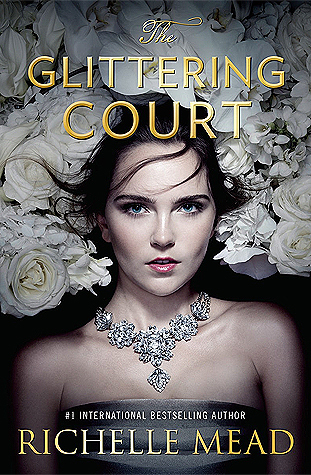
The Glittering Court (The Glittering Court, #1)
The Glittering Court by Richelle Mead


Mostly this one just allowed me to put the final nail the the Richelle Mead coffin. I've read multiple books from her now and I can confidently say that her work just isn't for me. The way she crafts characters just doesn't work for me. I like angst and dramatic self-pity as much as the next person but this pushes it, even for me. 


I PROMISE I'll be done with the S. J. Maas commentary after this. For this post at least. (If only because there aren't any other series out by her). One day I might make a longer post discussing my kind of difficult relationship with her books but... not this one.

*breathes in* *breathes out* Reading this book (and also the sequel and also kind of browsed book 3 before finally just giving up). Part of it is that romance-heavy books aren't really my thing. I mostly found myself going "wait was that supposed to be sexy? That was just... uncomfortable and borderline creepy" and it turns out that's just off-putting.

Outside of that I felt that this series didn't do a great job of carrying it's story or building it's world without resorting to dumping information on the reader.

After reading this and Throne of Glass I feel like I'm pretty attuned to a few tropes that I don't like. I find mating-bond stuff cringe-y at best, and that features heavily, so now I know I'll be steering clear of media that falls back on that particular trope...


Jane Eyre
Jane Eyre by Charlotte Brontë

Okay so to say I've "read" this is kind of an exaggeration... I'll admit I've yet to finish it.  I sit upon a throne of lies, etc. etc. 

I did get most of the way though the audiobook before deciding I'd rather read the book and then just... didn't pick up the book. I don't read a lot of classics for the simple reason of: I've found I don't enjoy a lot of classics. 

I'm glad I picked this one up mostly because now I get to make a million jokes at Mr. Rochester's expense regarding things like "never being fully convinced your new governance isn't a fairy" and "not liking a child because she's not a great conversationalist" oh and also "lying to your new governance/girlfriend about the wife whom you keep locked in the attic except for those times when she gets out and sets fires" honestly it's a pretty wild story and I like to make jokes. Rochester, you're lucky Jane is into people think she's a possibly-malevolent magical creature, insult her, lie to her, and now have no house because the aforementioned attic wife finally managed to burn it down. Romance.  


This one's stretching the prompt almost to breaking. I think this is a really excellent book but it is also one of the saddest books I've ever read. Reading it was both a meaningful experience and once that I don't think I'll ever repeat. The Seven Husbands of Evelyn Hugo is nuanced and thought-provoking and has definitely stuck with me (more even than I was expecting when I wrote the review) but it was also somewhat staggering in how melancholy aspects of it were. I'm glad I read it, essentially, but I wouldn't do it again (and I say that as a chronic re-reader). I think I'm a bit clearer on why in my review, which you can find here, if you want clarification.


The Kite Runner
The Kite Runner by Khaled Hosseini

Okay so I'm actually still not really glad I read this, except that when someone says "wow you sure do have a lot of anger about high school English, what did it ever do to you?" I can just point to this book. 

I'm still not really sure if this was a good or a bad book overall (I personally didn't find the characters, story, or prose that compelling) but it's more that... look. It was just a book with subject matter that I think I would find difficult to handle now, reading more only my own mental enrichment, much less with my grade on the line as a 16 year-old. So yeah. Still not totally over that.

So I guess what I'm saying is that being made to read this book really drove home an idea? Something about what kind of literature many people teaching English think teens should read and the wide, wide chasm between that and what I personally enjoy and/or find meaningful in a story.


One Hundred Years of Solitude by Gabriel García Márquez

I'm glad I read this one and I think I might like to give it another try with the perspective I have now, but I didn't particularly enjoy it when I read it in high school. Mostly, I think, because I wasn't familiar with the cultural context in which it was written (which I'm more aware of now), which is fairly essential to grasping the nuances of this story (or being able to make sense of most of it in any form at all). To high-school me it seemed like vaguely symbolic surrealist confusion but my understanding of the history of Latin America as a place and magical realism as a genre has improved quite a bit since then and I think I'd be able to get more out of the reading experience.