Showing posts with label Thoughts On. Show all posts

Wednesday, December 9, 2015

Thoughts on Rating


How I Rate Books

Sometimes rating a book is the hardest part of writing a review for me. This is when you make all those observations about the book and give them a quantity. It doesn't have have words, or explanation, its just a number. All of your thoughts being turned into a number.

"Then why do it?" I ask myself on occasion. I think that it is still valuable to assign a rating to books (though sometimes it feels really weird and artificial). It really is a part of writing a review for me- it communicates to anyone reading what kind of a review this is going to be, and I think it contributes a lot to how I write my review here.

Part of the issue is that I'm such a student. I'm incredibly used to ratings. Increasingly, I think in percentages, I rate my books out of ten. I'm not a fan of the five-star rating system, because I mentally turn it into a percentage, and it bothers me that there isn't a 50%. To me, 5/10 means that it passed, but wasn't great. (Like I said, student.)
To me this is 80% and it bothers me that it can actually be anywhere from 70% to 90%. Why, Goodreads?
It does vary quite a bit, though, depending on things like if the book managed to actually make me feel emotions (other than frustrated, when-will-this-be-over emotions). Basically, in my reviews, it is best to look at the rating and the "Review at a Glance" to get an impression of how I felt about a book. Or you could read the review. That would be good too.

Retroactively Rating Books

I'll often give a book a rating right when I finish it, and I'm still riding whatever emotional wave came from reading it. (Incidentally, I NEVER rate a book before or during my reading of it.) I often come back the next day, or while I'm writing the review, and change the rating. This can go up or down, I have certainly done both.

Do you rate your reviews?

Sunday, June 7, 2015

I have a love-hate relationship with my Goodreads Challenge

2015 Reading Challenge

2015 Reading Challenge
Kelly has read 42 books toward her goal of 100 books.
hide

For me, there's something enormously motivating about challenging myself to read a certain number of books in a year. I like having a goal, it gives me something to plan for, and I like the feeling of accomplishment that comes with keeping up with my goal. Its led me to really realise something that I only sort of knew about myself: I don't do well with low bars. If I set my reading challenge for 100 books, I will complete 100 books. If I set it for fifty, it'll be more of a struggle. (I'm sure there's some psychology major shaking their head right now, because I'm not sure what that says about me as a person...)

Things I love about my Goodreads challenge:

  • It makes me think of what I'll read next, as opposed to just sort of wandering around waiting for something to catch my fancy. (Though I still do that sometimes).
  • It makes me push through reader's block more that I generally would. Not in an "I must read this book or else" way, but in an "I should probably give another book a try" way. I'm not great at forcing myself to do things that I hate (vacuuming...) so I'm never really in danger of forcing myself to read if I really, really don't want to.
  • It has the dual effect of encouraging me to finish what I start, and discouraging me from slowly dragging through things I really am not enjoying. ("This books is alright right now, I think I can finish it, so lets read another 50 page and see where I'm at" versus "I cannot stand to read another page, this is wasting my time, I'm going to start something else.")
  • Goals. I like having a goal. I was hardcore at summer reading programs when I was a kid, and feel a touch of resentment that they don't offer one for adults.
Things I don't love about my Goodreads challenge:
  • It doesn't count rereads. This is sort of a pros-and-cons in itself, because I do explore new titles. I still wish it counted when I reread a book for the twelfth time, though. Its still a book. I still read it.
  • Do I count audiobooks? Goodreads does, but I'm not sure if I do. Audio is often a profoundly different way of experiencing a story. Don't get me wrong, I love audiobooks. I just experience them in a very different way than I do reading print.
  • Similarly, I don't track the manga I read (which isn't much, recently, but still) because it doesn't feel right to count it as a whole book. Pictures are a different medium of storytelling than print books are, and, because I go through them so fast, it feels a little strange to record them the same way I would record a novel.
  • It can discourage you from picking up longer or more intimidating books, because they'll take longer to finish. This is less of a problem for me, because I generally read books that I go through fairly quickly, and also because I'm still pretty relaxed about the challenges. It really just takes a little more planning to make it work.
    • I read The Silmarillion earlier this year, which is more dense than a lot of my other reads, despite having a similar page count, I usually had more than one book on the go. I read Silmaril in small amounts every day or so, and still managed to keep up with my challenge.
Overall, I would say that it works for me, though I definitely see why people would choose not to do a challenge like this one. It can be a lot of pressure it you get really invested, or set a really ambitious goal. For me, 100 books isn't outside being completely reasonable- I already finish a book every few days, so this doesn't add crazy amounts of pressure. Though, seriously, they could count rereads.

Anyone else have thoughts on their Goodreads challenge, or any other challenge they're participating in this year? Any challenges that you love or hate participating in?

Thursday, April 16, 2015

This Assault-y Thing Isn't Romantic

Story time! 
So Kelly, science student and (of late, far too occasional, blame exams) YA book blogger is eating delightful customized pasta in one of her university's fine cafeteria establishments. She thinks to herself gee, I'm glad my third exam is done... I'll read for five minutes before resuming studying for the next. 
This was, as it turns out, a mistake. Because that book was just at the point of "Let's get this totally pointless love triangle-y thing rolling, time for the kiss scene." Now. Kelly had not been loving this book up until now, but was trying to push through. But as she read the kiss scene in question, she realised that she likely wouldn't be able to because it was causing feelings of deep anger. 
--end scene--
Why, you may ask, was Kelly so furious? We know by this point that, while I don't like love triangles, I'm fairly well conditioned to ignore them and continue on if they aren't a big part of the story. That wasn't my primary problem with this scene. My problem was the kiss. My problem was that. It. Read. Like. An. Assault. Scene.

He kisses her after yelling at her. After slamming his hands on a wall beside her head. She pushes him away and tries to run, and he drags her back with his hand over her mouth. Yes, there were some slight extenuating circumstances, but no, I still don't think it was okay to kiss her in the first place, and then afterwards prevent her from leaving.

This was the straw that broke the camel's back, where the camel was my ability to deal with creepiness being passed off as romance. Here's my deal. 

These books are targeted toward teenagers, often young women. The last thing you want to be teaching them is that having any sort of intimacy forced on them against their will is what's done. That is is normal. That it is romantic.

It isn't romantic. It isn't sexy. Its just disturbing.

It isn't just a book. Readers know best of all how books shape us. They shape our perception of the world, of what is and isn't right. When you write something like kissing a girl even though she's pushing away, or saying "no," or, really, in anyway suggesting that she isn't interested in being touched, and pass it off as romantic, you're saying a) that it is romantic to force yourself on someone and b) that it is romantic when someone forces themselves on you. That it is something you should be grateful for. And that is worrying.

It isn't that it happened once. It is that it keeps happening. Destroy this idea that having a person violating your personal space is romantic. That having someone physically prevent you from leaving, or calling out, is romantic.

I've come up with a few simple questions to ask yourself:
1. Am I, in fact, planning on writing an assault scene?
 If you answered yes to this question, this list isn't for you Go find some resources on writing assault scenes. If you answered "Of course not, I'm writing a romantic and/or sexy scene," proceed to question two.
2. Is one character in a position of power (physically or otherwise) over the other?
I you answered yes, you have to be really, really careful in how you write it. If either character can't, for any reason, give consent, you have a problem. If you answered no, head on to question 3.
3. Do both of my characters want to be intimate with each other?
If you answered no, consider again why you're writing this scene. If you answered yes, proceed to question 4.
4. Take your written scene out of context. Does it still sound as romantic as you think it sounds in context? Why? Explain. (2 marks.)
These obviously aren't catch-all, but what I'm saying is think long and hard about your scene. If it seems like an assault scene that should be because it is designed to be one, not because it is supposed to seem romantic.

Now, go forth and write good kissing scenes!

Thursday, February 13, 2014

Thoughts on Audiobooks

I've been listening to audiobooks recently. They take a lot longer for me than reading a book would for me,  but I do enjoy them. And since I haven't posted anything in a while (due to general busy-ness).

I've always enjoyed audiobooks. When I was growing up, the way my parents discovered to keep long car rides bearable for everyone was to let us listen to audiobooks. When I was little they were on cassette tape (memories...), and it was titles like Sherlock Holmes (my favourite was, and still is, The Speckled Band). I don't think that I can actually find the version I listened to anywhere, I don't think that it is available today, and the library has since rid itself of all of the cassettes in it's collection. (Wow, now I feel like saying "In my day we had cars with cassettes...")  

When we got a car with a CD player, we discovered the Harry Potter audiobooks. We were already reading the books, but we listened to them later. Jim Dale is brilliant. He won two Grammy Awards and has two Guinness World Records for his work on those books. I have listened to these books a rather alarming number of times. 

Recently, I've started to listen to them again. My library has MP3 audiobooks that you can borrow for a few weeks. I've recently finished listening to The Raven Boys, which I've actually already read (though I'm listening to part of it again, not only do I re-read, I also re-listen). 

Things that I find fantastic about audiobooks are:
 1. You can do other things while you listen. It's nice to be able to enjoy a book hands-free.
2. Sometimes you notice things that I didn't before when I listen to it (this also happens when I re-read books)
3. Accents. I don't usually read characters with an accent, and I find it really wonderful to hear it with the accents of all the characters. It's really great.

That about concludes my babbling about audiobooks. Let me know if you have any favourite ones in the comments. 

Thursday, November 14, 2013

Thoughts On: Reading for School

I assume everyone had to read in English class in high school (or whatever the equivalent in your country is). I also assume that, unless you had an unusually progressive teacher and curriculum, this was probably less fun than reading on you own time because you wanted to.

This is going to be a long ramble about my high school reading for my English classes. We were supposed to read one Shakespeare play every year, which wasn't too bad. It stretch you thinking (I was in an experimental program for tenth grade English, and I didn't have to do it that year). I do wish that we might have actually seen one play at some point, the way that it was meant to be seen. I don't really have a problem with reading Shakespeare. The problem for me was the novels, or specifically, one novel.

In grade eleven we read the Kite Runner by Khaled Hosseini. To summarize how I felt, and still feel, about that book, I can use three simple words: I. HATED. IT. I was miserable reading it and found it pretty traumatic, but not in any impactful way (more on that later). I don't think that it is a spoiler to say that this book discusses rape very near its start and is meant to be a redemption story- the narrator saw it happen and didn't do anything. I thinking there are a couple reasons why I really didn't enjoy this book:

  1. The narrator didn't interest me. The only reason that I really kept reading was because I had to finished my assigned pages for class. I know that I skimmed a lot toward the end, just so I could pretend that I read it.
  2. The subject matter disturbed me. If you look at my reviews, you'll see that I don't read books about rape. I just can't. I don't have that sort of emotional maturity, I suppose. They actually had to send a waiver home saying that, if this book caused the child to be scarred, it wasn't the school's fault. Should you really be making a bunch of sixteen year-olds read it then? I'm not saying ban it, I'm thoroughly against that, but maybe don't make it required material. There was an alternate option, but I was told that I wouldn't be able to participate in class at all, and that I would still have to be present for the discussions. I refused to take the book into my room. I might have overreacted, but, like I said the content was disturbing for me.
  3. I found the book relentlessly depressing. It is supposed to be a redemption story, but I didn't really feel that much redemption happened. It didn't leave a positive impact in me, and, while the ending felt like there was intended to be some sort of hope, I didn't feel it. It was in a couple scenes horrifying, and otherwise simply unenjoyable to read, to the point where I stopped being emotionally impacted by anything that happened.
You'll notice these are personal reasons for me. Reason's I didn't like the book, personally, but I also feel that there is a wider issue here: English teachers seem to think that teenagers should not read books written for their age group. I don't know why this is, but they just don't. I feel like the young adult genre gets a bad reputation for being poorly written and having no message, which, anyone who reads a lot could tell you, is not true.

These are books that are written for teenagers, with a mind to their world and emotional climate (does that make sense). They are written to be read by young adults (though they can totally be enjoyed by adults too). There are a lot of young adult books that could be inserted into a class medium and used to teach. There are plenty of young adult books that discuss a plethora of issues in a way that might, at the very least, be slightly funner than eating worms, and even possibly- gasp- enjoyable for students. I shall even make a list of books that can be used easily in teaching (with the high school curriculum of my area in mind).

Grades Nine and Ten: Exploring Heroes and the Heroic Journey


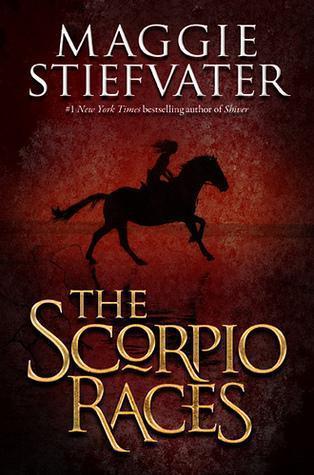
Dark Life (Dark Life, #1)Airborn (Matt Cruse, #1)Leviathan (Leviathan #1)VesselSeraphina (Seraphina, #1)The SupernaturalistThe Scorpio Races
Look! Young adult adventure stories! Heroic protagonists of various types going on quests and overcoming prejudice (and usually both)! Take notes, this will be on the test.

Grade Eleven and Twelve: Tragic Heroes and Antiheroes (and I've thrown moral ambiguity in too)
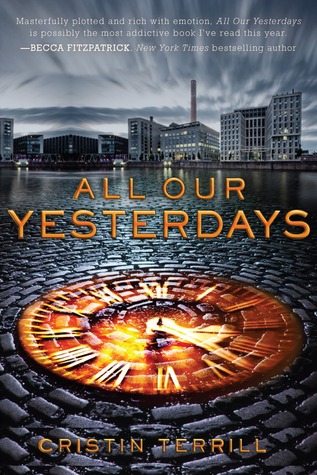
All Our Yesterdays (All Our Yesterdays #1)The 100 (The Hundred, #1)
These two. I think All Our Yesterdays actually provides a good example of the tragic hero (James- if you look for it, you will see it) as well as consequences. The 100 is something that I think would be good for discussing all sorts of ethics, morals, consequences and what makes a hero (or antihero, or villain).  Basically, I think that they could prompt discussion about real world topics and issues.

Those are some that I have been thinking about recently. There are a lot of books that could be used the the "heroism" area. I'm sure there are others for the "tragic hero" area, but All Our Yesterdays has been floating around in the back of my head for a while (it seriously does not need a sequel by the way). Those are just some ideas, and I'm sure there are books that would fit better. Not really the point.

The point is that schools should stop avoiding letting young adults read books written for a young adult audience. They do have meaning, they do have messages and many can stand up to analysis. The way English it taught now, it is just going to scare students off of reading, since it is often depressing material. So stop viewing it as some inferior form of literature, and look at possibly making use of the material instead.

Wow, that got long. If you're still here, thanks for reading my ramblings. What did you read/are you reading in high school. What do you think of the books that I have brainstormed here? Do you have any ideas? Let me know what you think in the comments.

Thursday, October 31, 2013

Thoughts On: Book-to-Movie Transitions

With all of the talk about books becoming movies, or books that have recently become movies, I think this is a topic we've all been thinking about a little. There have been pretty poor adaptations in the past (looking at you Eragon and Percy Jackson) some that were alright, but not enough to make my crazy about them (Mortal Instruments: City of Bones) and some that I really enjoyed (The Hunger Games). And of course a couple that I adore (Lord of the Rings). As well as a whole bunch that hit different parts of the scale.

With all of the poor adaptations, I think it is pretty reasonable to be apprehensive. I mean, we've all weathered some really poor adaptations. I can be pretty forgiving of some flaws in book-to-movies, but others I just can't stand.

I'm not really a die-hard true-to-the-book sort of person. Changes are going to be made. They have to be made, because books and movies are fundamentally different ways of telling a story. Sometimes something that I love in a book wouldn't translate well on the screen. I understand if actors don't look exactly as they are described in the book. You can only get so close to how someone looks in a reader's head, and I completely understand that. However, I feel like there is a need for actors to fit with there characters. If the characters are twelve, do not make the sixteen (Percy Jackson), since it can have quite an effect on their development arc. I'm of two minds about appearance things. If an aspect of someone's appearance is mentioned frequently, or acts as a distinguishing characteristic, it should stay the same. That said, I think it is more important to stay true to who a character is fundamentally. I think character is also one of the most important aspects in whether or not the film is a good adaptation or not.

I am also of the opinion that setting is something that you should try to stay pretty true to, since characters interact with it on a regular basis, and it is something that makes a movie a visual masterpiece if done right. Especially in the fantasy genre. There are some seriously beautiful fantasy sets out there. Setting and props create an atmosphere, and they can convey how much work was actually put into the film. Unlike with character, which is hugely actor-dependent, props really are a team effort and are a really big contributor to the atmosphere and overall realness of the scene. The amount of effort that can go into designing a set is incredible, really, and like I said before, results in some really beautiful sets.

Also, a shout out to all YA fantasy book-to-movie adapters. Don't decide what the audience wants. You're alienating a lot of people by deciding everything has to be primarily romance and no backstory. If I hadn't read the book for most of the adaptations I've seen recently, I would be really confused as to what is going on, since you haven't given any thought to the world-building, which is kind of important in fantasy, sci-fi, and urban fantasy especially. Some of us are there to watch our main characters save the world, not angst over their pitiful romantic lives for a full two hours. (And yes, I understand that, depending on the book, there may be a great deal of brooding involved, however, this is one of those things that works better in a book where we actually see the thoughts of the character. Watching someone stare moodily at a wall for five minutes doesn't usually mean that much to an audience.) If there is romance in it, keep it, but don't throw away all of the other aspects just so our love interests can stare into each others eyes when they really should be doing something that moves the plot along. You only have two hours. Use them well.

I think that is it for me. I'll just conclude that I am all for adaptations. I love seeing books realised in a visual medium. I just like to see it done well.

Let me know your thoughts on books becoming movies. What is your favourite/ least favourite film based on a book?

Wednesday, July 31, 2013

Thoughts on Post-Apocalyptic and Dystopian Novels

Ashfall (Ashfall, #1)A dystopian society is the opposite of a perfect (utopian) society. Typically something terrifying has happened and the world is essentially in shambles. Maybe radiation killed most of Earth's life, leaving mutants to try to make their way in a destroyed world. Maybe tropical storms have destroyed most of the major cities or a plague is systematically destroying the human races as survivors struggle to find a cure. Maybe the rising ocean has finally covered most of the planet's land in water. Maybe the world has been overrun by aliens or zombies or angels or beings from another dimension. Scattered clumps of survivors fight to cling on, or people wander around in a haze, content to do whatever the totalitarian government says.
Dark Life (Dark Life, #1)
Dystopia is a way of presenting dire possibilities for our societies, and using it to reflect the how humans (both individual people, and an overall society) respond to the extreme pressures. The world in a good dystopia is vivid. The author has to paint a picture, like in the same way a fantasy or science fiction author would (dystopia is generally sci-fi or fantasy or a mix thereof). So good dystopian authors can produce a lot of beautifully terrifying worlds.

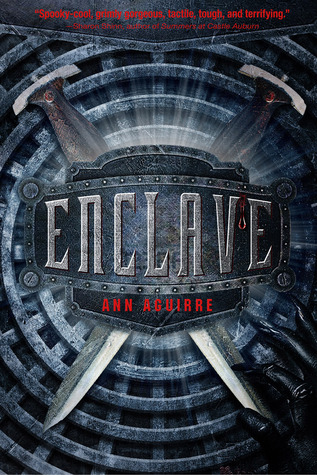
Enclave (Razorland, #1)I really like dystopia. In addition to the worlds that are created, and the story of how the world ended, but we get to see humanity as it struggles. We get to see how humans react to the desperation. It's a great analysis of humanity.

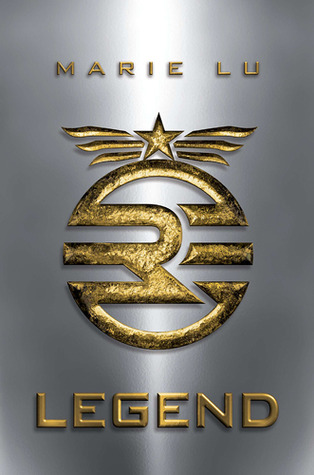
Legend (Legend, #1)In the post-apocalyptic novels I love, you see humanity at it's worst. People are desperate and doing horrible things to survive. You see the worst of us and that we can all be monsters. But you also see some of the best. You see people rising above everything, and some how managing to find something to hold onto in spite of it all. Somehow finding a reason to keep going, to keep being human. Whether its giving half of their meal to a starving animal or showing mercy to an enemy, or finding a way to forgive themselves. They find a way to be better, to do what is right, and fight against the overwhelming odds. Those are the stories that keep me coming back. That willingness to stand up when everyone else is bowing down. The willingness to hold onto the idea of living instead of just surviving. The way that the characters are resilient, and hold onto their beliefs and will to fight for those beliefs. That hope that, no matter how small and shaken, perseveres.

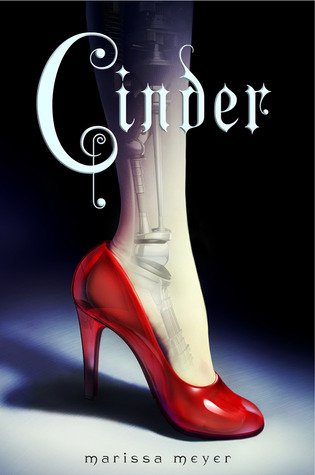
Cinder (Lunar Chronicles, #1)There are a lot of dystopian stories that don't have that element of hope and endurance. These are meant to be cautionary tales, but I find they don't make me want to change. I read Brave New World, and in that story nothing changed, and our characters gave up. And I just felt defeated. I didn't feel like I could do anything to avoid an eventuality like the one depicted in the story. It isn't because it is a horrible book, or that it is badly written. I just didn't like it. Endless despair doesn't work for me. I just shut it out, because if the characters don't have a will to carry on, why should I?
Angelfall (Penryn & the End of Days, #1)
I guess I've got a soft spot of the hero type. The ones who keep fighting for what is right even when their faith is shaken and they are down on their knees. The ones that show, no matter how much horrible has happened, there is still love and compassion and hope. I suppose that, as pessimistic as I can be, I want to believe that humans are good. I have to believe that.

Am I a sap or what?